Why Speed Is Your Digital First Impression
In the digital age, your website is often the first encounter potential customers have with your business. It serves as your online shopfront, your main communication hub, and a vital channel for growth. But in a world where users expect instant access, how fast your website loads has become a deciding factor in whether visitors engage—or leave.
This isn’t a small technical issue. Website performance such as speed (fast loadtimes) has a direct effect on how people perceive your business, how discoverable your site is via search engines like Google, and how effectively you can convert visits into revenue.
Think about your own habits: how long are you willing to wait for a webpage to load before giving up? Today’s users are conditioned to expect immediacy. Even brief delays in page loading can cause irritation and increase bounce rates. Frustrated visitors tend to hit the back button quickly, turning to faster, more responsive competitors instead. Every time this happens, your business loses out—not just in traffic, but in engagement, lead generation, and ultimately, sales.
Let’s explore exactly why every second counts, and how your website’s loading speed can directly influence your performance, profitability, and long-term brand success.
The Real Cost of a Slow Site: Impact on Sales and Revenue
Website Speed Directly Affects Profitability
A fast website doesn’t just improve user experience—it’s a proven driver of sales. Numerous studies show a direct connection between how quickly your site loads and how effectively it converts visitors into customers. The takeaway? Every second your site takes to load can cost you actual revenue.
Faster Sites Close More Sales
When your site loads in under one second, it can produce conversion rates two to three times higher than those with five-second load times. Stretch that to ten seconds, and you risk losing up to 80% of your conversions. Even marginal improvements—reducing load time by a few milliseconds—can positively influence user behaviour, leading to more purchases and higher average order values.
Mobile Sales Suffer from Even Slight Delays
Mobile users are notoriously less patient. A one-second delay on a mobile device can slash conversion rates by 7% to 20%. With over 50% of web traffic in Australia now coming from mobile, even minor lags in performance can lead to significant revenue loss. For eCommerce businesses, that translates to missed transactions and lower customer lifetime value.
Checkout Delays Lead to Cart Abandonment
Many users abandon their shopping carts not because they changed their minds—but because the checkout process was too slow. This common frustration at the final step can undo all the effort you put into getting a customer to the purchase stage. Slow pages kill momentum, and with it, sales.
Speed as a Revenue Strategy
Treat website speed as a growth lever, not just a technical detail. Faster sites do more than load quickly—they retain visitors longer, support seamless navigation, and boost trust. Optimising for speed, particularly on mobile, turns your website into a more powerful revenue-generating tool and enhances the overall business experience.
More Than Just Sales: How Speed Impacts Engagement and Satisfaction
Why Load Time Shapes the Entire User Journey
While the financial benefits of a fast-loading site are clear, the ripple effects go much deeper. Website speed plays a major role in shaping how users interact with your content, whether they explore more, and whether they return. In short, speed builds user satisfaction—one of the most valuable assets in your digital toolkit.
When your pages load quickly, users are more likely to browse multiple sections, dive into your content, and engage with features like forms, product filters, or chat tools. This behaviour doesn’t just benefit your visitors by helping them find what they need—it also sends strong engagement signals to search engines like Google, improving your visibility online.
First Impressions and Long-Term Relationships
A fast site builds immediate credibility. When someone has a smooth, snappy experience on their first visit, they’re more likely to return. That first impression lays the groundwork for brand trust, repeat engagement, and long-term loyalty.
When Slow Means Lost Opportunities
Conversely, a sluggish website causes instant frustration. And with so many options available, users rarely stick around waiting. They bounce—often to your competitors. Long load times introduce friction at every step, causing drop-offs before engagement can even begin.
It’s not just lost traffic in the moment—it’s a hit to your brand’s reputation. People associate poor performance with unreliability. A single slow interaction can trigger negative reviews, fewer referrals, and lasting user aversion.
Lasting Impact of a Fast First Experience
Users form lasting opinions quickly. The speed of your website often defines their very first impression—and that impression tends to stick. If they decide your site is unreliable or frustrating, you may not get a second chance.
Getting Noticed: Why Speed Drives Better SEO Results
Search Visibility Starts with Speed
To rank well in search engines, your website needs more than great content—it needs to deliver it fast. Website speed has become a major ranking factor, especially with Google, which values fast load times as a key part of providing a good user experience. In a competitive market, speed helps determine whether your site shows up on the first page—or not at all.
Google’s Mobile-First Approach to Rankings
Since 2018, Google has factored mobile page speed into its search rankings. That means slow-loading mobile sites are at a disadvantage, even if their desktop versions perform well. For Australian businesses with growing mobile traffic, optimising for speed across devices is no longer optional—it’s essential for staying visible in organic search results.
Crawl Budget and Engagement Metrics
Website speed also influences how well search engines can index your site. A slow site can reduce your crawl budget—the number of pages Google’s bots will scan during a session. If those bots spend too long waiting for pages to load, they might not reach your most valuable content, limiting what gets indexed.
Speed impacts engagement metrics too. Pages that load slowly lead to higher bounce rates and lower dwell times—both signals that tell search engines your site may not be providing a great experience. These behavioural cues can drag down rankings even if your content is solid.
Core Web Vitals and Page Experience
Google now includes Core Web Vitals—metrics like Largest Contentful Paint (LCP), Interaction to Next Paint (INP), and Cumulative Layout Shift (CLS)—as part of its overall “page experience” ranking signal. These vitals measure how quickly your main content loads, how responsive your site feels, and how stable the layout remains during loading.
Scoring well on these metrics isn’t just about impressing Google. It ensures your site is fast, smooth, and user-friendly—qualities that benefit real people just as much as algorithms.
The Unseen Impact: How Speed Shapes User Perception and Trust
It’s Not Just Technical—It’s Emotional
The effects of slow website loading go far beyond bounce rates and lost sales. They influence how users think and feel about your brand. A slow experience triggers frustration, breaks trust, and makes your business feel less competent—even if your products or services are top-notch.
When users are forced to wait, their expectations are violated. That wait can feel much longer than it is, intensifying feelings of impatience and annoyance. Even minor delays create a lasting sense that your site—and by extension, your business—is unreliable or outdated.
Negative Associations Form Quickly
In the digital space, first impressions form in milliseconds. If a user’s first experience is a lagging page, it can colour their entire perception of your brand. Slowness gets subconsciously linked to low quality, poor maintenance, or even a lack of professionalism. And once formed, these impressions are hard to reverse—even if performance improves later.
Time Feels Slower When Waiting
Studies have shown that people perceive delays more negatively when interacting with digital content. A few seconds of waiting can feel like much more. This skewed perception means even short lags create outsized frustration. Over time, users remember those moments not just as inconvenient—but as untrustworthy.
Friction Breaks Focus and Flow
Speed isn’t just about loading quickly—it’s about enabling uninterrupted interaction. When users experience lag, it interrupts their flow. That sense of rhythm and ease is replaced with friction, reducing their motivation to stay engaged. This can even lead to “rage clicks”—repeated, frustrated clicks on unresponsive elements.
First Impressions Stick
The “primacy effect” is strong in web experience. The speed of your site on a user’s first visit shapes how they feel about your brand going forward. If they encounter delays at the start, they’re likely to view your entire site—and your business—with scepticism.
Understanding Your Speed: The Metrics That Matter
Why You Need to Measure What Users Experience
To improve your website’s performance, you need to know what to measure. Key performance indicators (KPIs) help reveal where delays occur and how users perceive your site. These website metrics go beyond raw speed—they reflect how usable and satisfying your website feels in real-world conditions.
The Core Metrics to Track
- Largest Contentful Paint (LCP): Measures how quickly the largest visible content element—often an image or headline—appears. It’s a strong indicator of when the main part of a page becomes usable.
- First Contentful Paint (FCP): Captures the moment the first text or image appears, showing users that the page is loading.
- Interaction to Next Paint (INP): Assesses how quickly your site responds to user input, like clicks or taps, throughout their visit.
- Cumulative Layout Shift (CLS): Tracks how much content shifts unexpectedly during loading. A low CLS means your page feels stable and predictable.
- Time to First Byte (TTFB): Reflects how fast your server delivers the first byte of content. It’s a measure of your hosting environment’s performance.
Measuring Doesn’t Require a Tech Expert
You don’t need advanced skills to track these metrics. Free tools like Google PageSpeed Insights, GTmetrix, and WebPageTest provide easy-to-understand reports and practical advice. These tools highlight areas for improvement and offer specific fixes you can implement.
Key Takeaways on Speed Metrics
- Focus on user-centred metrics like LCP and INP—they reveal how real visitors experience your site, not just how fast it technically loads.
- Test performance across devices and network conditions. Slowdowns often hit mobile users hardest.
- Stay up to date. New metrics like INP (which replaces older ones like FID) reflect an evolving understanding of user experience—and what search engines prioritise.
How Do You Stack Up? Benchmarking Your Website Speed
Why Comparing Matters
To understand how well your site performs, it helps to compare your speed to industry benchmarks and competitor averages. These comparisons reveal where you stand—and where you might be falling behind. Your site might feel fast to you, but your users could be experiencing something different, especially across various devices and internet connections.
Desktop vs. Mobile: The Performance Gap
Websites typically load faster on desktop than on mobile. That’s because desktops usually have stronger processors and more stable internet connections. On average, desktop pages load in 1.3 to 2.5 seconds, while mobile pages often exceed 8 seconds. This highlights just how important it is to prioritise mobile performance, particularly in mobile-first markets like Australia.
Google’s Recommendation
Google advises that your site’s LCP (Largest Contentful Paint) should occur within 2.5 seconds to deliver a “good” user experience. Meeting this benchmark puts you in a stronger position to satisfy both users and search engine algorithms.
Don’t Just Look at Global Averages—Check Your Industry
Industry-specific benchmarks are often more useful than global ones. If your competitors all load within two seconds, being at five seconds could cost you users. Tools and services that provide speed data by sector can help you set realistic goals and tailor your optimisation efforts more effectively.
Key Takeaways on Benchmarking
- Desktop and mobile performance vary significantly—optimise for both, but prioritise mobile.
- Use competitor data to set practical, relevant speed targets that align with your users’ expectations.
- Focus on the metrics Google values most, like Core Web Vitals. Raw load time matters less than how fast your site feels and functions during real user interactions.
Practical Steps: How to Optimise Your Website for Speed
Speed Starts with Smart Design and Development
Improving website speed isn’t a one-time fix—it’s a continuous effort involving design, coding, and infrastructure. Fortunately, there are proven techniques that can dramatically reduce load times and improve user experience.
Key Areas for Optimisation
Optimise Your Images
- Large images are one of the biggest causes of slow websites. Compress them without sacrificing quality, use modern formats like WebP, and apply responsive sizing.
- Consider lazy loading—this defers loading images until they’re actually needed on screen.
Use Effective Caching
- Browser Caching: Speeds up return visits by storing static assets on users’ devices.
- Server-Side Caching: Reduces server load by storing pre-built versions of pages for quicker delivery.
Implement a Content Delivery Network (CDN)
- A CDN hosts your content across multiple servers worldwide. It ensures users load files from the nearest location, cutting down on latency and speeding up delivery—especially important for global audiences.
Streamline Your Code
- Minify HTML, CSS, and JavaScript: Strip out unnecessary characters, spaces, and comments.
- Compress Files: Use tools like Gzip or Brotli to reduce the size of your site’s files before they’re sent to users’ browsers.
Boost Server Performance
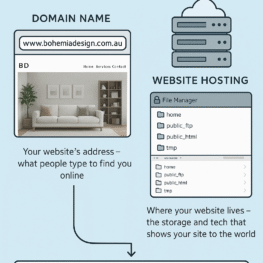
- Choose a quality hosting provider and consider upgrading to faster plans or dedicated servers.
Selecting a high-quality web hosting service is one way to ensure your site can sustain its speed under growing traffic. - Regularly maintain your database to ensure queries are processed efficiently.
Keeping Up with the Best: What Google Recommends for Site Speed
Google’s Guidance Matters
As the world’s dominant search engine, Google plays a critical role in shaping website standards. It doesn’t just rank sites—it also provides tools and benchmarks for improving performance. Following Google’s speed guidelines can help your website perform better in search results and create a smoother experience for visitors.
Core Web Vitals Explained
Google’s Core Web Vitals are three specific metrics that measure real-world user experience:
- Largest Contentful Paint (LCP): How quickly the main content of your page becomes visible.
- Interaction to Next Paint (INP): How fast your site reacts to user input, like clicks or taps.
- Cumulative Layout Shift (CLS): How stable your page layout is while it’s loading—are elements shifting around unexpectedly?
These metrics are now integrated into Google’s search ranking algorithm. That means improving them isn’t just good for users—it can also improve your visibility in search as Website speed has become a major ranking factor, especially with Google, which values fast load times as a key part of good user experience.
If terms like LCP or CLS sound unfamiliar, our article provides a plain English explanation of Core Web Vitals and why they matter.
Tools That Help You Improve
Google’s free PageSpeed Insights tool gives detailed reports on your site’s speed. It includes both “lab data” (from controlled tests) and “field data” (from real users via the Chrome User Experience Report). It also provides prioritised, actionable suggestions for how to make your website faster and more user-friendly.
Field Data Matters Most
Although lab testing helps identify technical issues, Google prioritises real-world user data when assessing rankings. This means your optimisation efforts should focus on how your site performs for actual users across different devices and network conditions.
Key Takeaways on Core Web Vitals
- Core Web Vitals are now key ranking signals. Fast, responsive, and stable websites get rewarded in search results.
- Real user experiences matter more than test scores. Field data from actual sessions has the biggest impact on rankings.
- Google offers concrete performance targets—use them to guide your speed strategy and stay ahead of competitors.
The Bottom Line: Why Website Speed Deserves Strategic Focus
More Than a Technical Task—It’s a Business Priority
Website speed has evolved from a background concern to a central factor in online success. It affects nearly every key business outcome—from boosting sales and improving user engagement to influencing search visibility and reinforcing your brand’s credibility.
Even small delays in load time can erode trust, reduce conversions, and shrink your audience. On the other hand, modest improvements can unlock higher revenue, stronger loyalty, and better performance in search engines.
Performance Is a Competitive Advantage
Businesses that understand and act on the importance of website speed gain a powerful edge. Faster websites load content more effectively, retain visitors longer, and provide a more enjoyable experience that keeps users coming back. These benefits compound over time—building long-term growth, stronger brand affinity, and higher ROI from your digital presence.
Speed Metrics Guide Smarter Strategy
By tracking and improving speed-related KPIs—like Core Web Vitals, bounce rate, or session duration—you can continuously refine your site’s performance. Aligning your efforts with Google’s standards ensures your website stays competitive, visible, and user-focused in an evolving digital landscape.
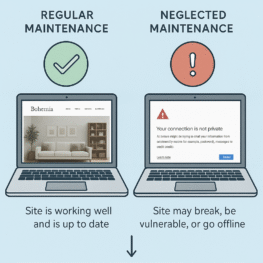
Without ongoing website maintenance, even a blazing-fast site can gradually bog down as updates are neglected and issues accumulate.
Final Thoughts
In a fast-moving online world, speed matters. High-performing websites earn more trust, generate more sales, and rank better in search. Those that lag behind lose users, revenue, and relevance.
But speed isn’t a one-time fix. Technology, expectations, and user behaviour are always changing. To stay ahead, you need to treat performance as an ongoing effort—one that evolves alongside your business. But speed isn’t a one-time fix – you can’t “set it and forget it.” Consistent website maintenance is key to preserving fast load times as your site grows.
Investing in website speed is investing in your future. It shows your users that you value their time, and it positions your business for sustained success in a competitive digital environment.
A Few Key Sources to Dig Deeper
To explore more about how website speed affects SEO, conversions, and user behaviour, the following resources provide trusted insights, statistics, and practical guidance:
- Shopify. (2024). 6 Website Load Time Statistics and Why They Matter. Offers key data on how page speed impacts conversion rates and customer experience.
- Google. Why does speed matter? – web.dev. A foundational resource on Google’s perspective about speed and how it fits into the broader user experience.
- Cloudflare. How website performance affects conversion rates. Breaks down the technical and financial implications of load time delays.
- Lumar. Why Site Speed Matters for SEO. Explains the connection between technical performance and search engine visibility.
- Google Developers. Understanding Core Web Vitals and Google Search Results. A comprehensive look at how Google evaluates and ranks web performance.
- Moz. How to Evaluate and Improve Page Speed. Practical tips and tools for improving speed and search performance.
- HubSpot Blog. 11 Website Page Load Time Statistics [+ How to Increase Conversion Rate]. A useful round-up of key stats and strategies for increasing conversions through speed.
- Backlinko. Google’s 200 Ranking Factors: The Complete List (2025). Offers broader context on ranking signals, including those related to page speed.
- Think with Google. Page Load Time Statistics. Reveals mobile speed benchmarks and insights into user behaviour.
- Google Developers. About PageSpeed Insights. Your go-to tool for measuring and improving speed metrics with real-world user data.